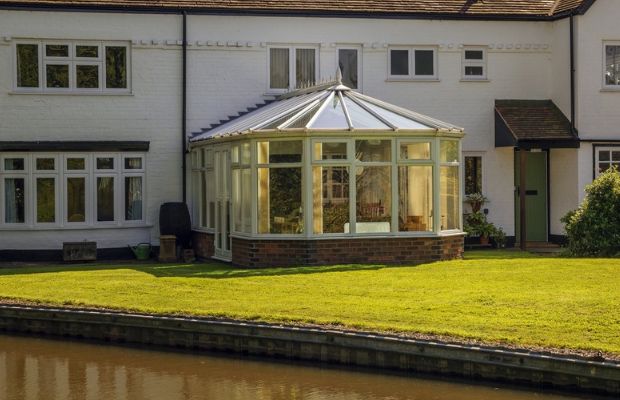
A conservatory is a largely glazed structure attached to a house, built to add living space and let in plenty of natural light. For planning purposes, it’s treated the same as any other single-storey extension, but that heavy glazing is what can set it apart when it comes to building regulations.
There are a few recognised styles to choose from. A lean-to has a simple, single-slope roof and tends to be the most compact and affordable option. Victorian and Edwardian styles both use a pitched roof, with the Victorian version usually featuring a bay-fronted, faceted shape and the Edwardian a square or rectangular footprint. A P-shaped conservatory combines two of these styles into one larger space, often used to create separate seating and dining areas. Orangeries sit somewhere between a conservatory and a traditional extension, with more solid brick or rendered walls and a glazed lantern roof rather than glass from top to bottom.
Read on for everything you need to know before adding one or buying and selling a home with one already in place.
Related: Inspiring loft conversion ideas to transform your home
Materials and roof options
uPVC is the most popular frame material, mainly because it’s low maintenance and offers solid thermal performance without costing the earth. Aluminium frames cost more but allow slimmer sightlines and larger glazed spans, giving a more contemporary look. Timber frames have a traditional appeal and often suit period properties well, though they do ask for more upkeep than uPVC or aluminium.
Roof options have come a long way in recent years. A glass roof lets in the most light and suits a conservatory you plan to use year-round, while polycarbonate is a cheaper option that doesn’t perform quite as well thermally. Solid, tiled roofs are increasingly popular too, since they improve insulation considerably and make the space feel much more like a genuine extension, though this can change how the structure is treated for building regulations.
Related: What not to fix when selling a house
Benefits and potential drawbacks
The main draw of a conservatory is extra living space without the cost or upheaval of a full extension, plus all that natural light a glazed structure brings in. For many homeowners, it also creates a much closer connection to the garden than an ordinary room would.
That said, there are trade-offs worth weighing up. A conservatory with a poorly insulated roof can turn uncomfortably hot in summer and chilly in winter, which limits how much use you get out of it. Glass walls and roofs also mean less privacy and, in some cases, more upkeep to keep the space looking and performing at its best.
Planning permission and building regulations
Most conservatories fall under permitted development rights in England, so formal planning permission usually isn’t needed, provided the structure meets the same size and position rules that apply to single-storey extensions.
In practice, that means it should sit at the rear of the property, not extend more than four metres from the rear wall for a detached house or three metres for a semi-detached or terraced one, and not cover more than half the garden around the original house. Listed buildings, conservation areas, and properties covered by an Article 4 direction can face extra restrictions, so it’s always worth checking with the local planning authority before any work begins.
Planning permission and building regulations are two separate approvals, and a conservatory can be exempt from the latter even when it doesn’t need the former. To qualify for the building regulations exemption, a conservatory generally needs to be separated from the house by an external-quality wall and doors, have its own independent heating system with separate controls, and meet the relevant safety glazing standards. Remove the wall between the conservatory and the house, or extend the main heating system into it, and that exemption typically no longer applies.
It’s also worth knowing that the time limit for a local authority to take enforcement action against unauthorised building work in England changed from four years to ten, for work carried out from 25 April 2024 onward. That makes it more important than ever to hold on to any relevant paperwork, since a lack of proper approval can stay relevant for a lot longer than homeowners might expect.
Related: How to make money from property?
How much a conservatory costs, and whether it adds value
Costs vary quite a bit depending on size, style, and specification. A straightforward lean-to conservatory tends to sit at the lower end of the market, while larger, more elaborate styles such as a P-shaped conservatory or an orangery cost considerably more, especially with a solid or tiled roof and higher-specification glazing.
Whether a conservatory adds value to your home really comes down to how well it’s built. A well-insulated, genuinely usable space can be an attractive feature to buyers, while a poorly built or under- insulated conservatory that’s too hot in summer and too cold in winter may add little value, or even put buyers off. Quality of construction and how well the space fits with the rest of the house tend to matter more than the addition itself.
Ideas and ongoing maintenance
A conservatory can be so much more than a sitting room. Plenty of homeowners use theirs as a home office, a dining space, a playroom, or a garden room filled with plants. The right use often comes down to the size, orientation, and how well insulated the space is, since a room, you’ll use daily needs to feel comfortable whatever the season.
Keeping a conservatory in good shape mostly comes down to simple, regular upkeep. Frames and glazing benefit from a periodic clean, guttering and drainage are worth checking to avoid water damage, and it’s worth inspecting the seals around doors and windows to keep the space properly insulated. A solid or well-maintained roof will generally need less attention than an older polycarbonate one.
Related: Comparable evidence in property valuation: A guide for sellers
Buying or selling a house with a conservatory
If you’re buying, it’s worth asking whether the conservatory has planning permission where it was needed, and whether it meets building regulations or qualifies for the relevant exemption. A conveyancer can check this as part of the standard enquiries process, and where formal permission is missing, a Lawful Development Certificate can offer useful reassurance that the structure is considered lawful.
If you’re selling, having this information ready in advance, including any planning or building regulations documentation, tends to make the conveyancing process smoother and helps answer buyer and solicitor questions without delay.
For guidance on buying or selling a property, speak with your local Ellis & Co branch today.